WHMIS Across Canada: Legislation and Enforcing Authority in Every Province and Territory
Published: September 10, 2026 · Last updated: September 10, 2026
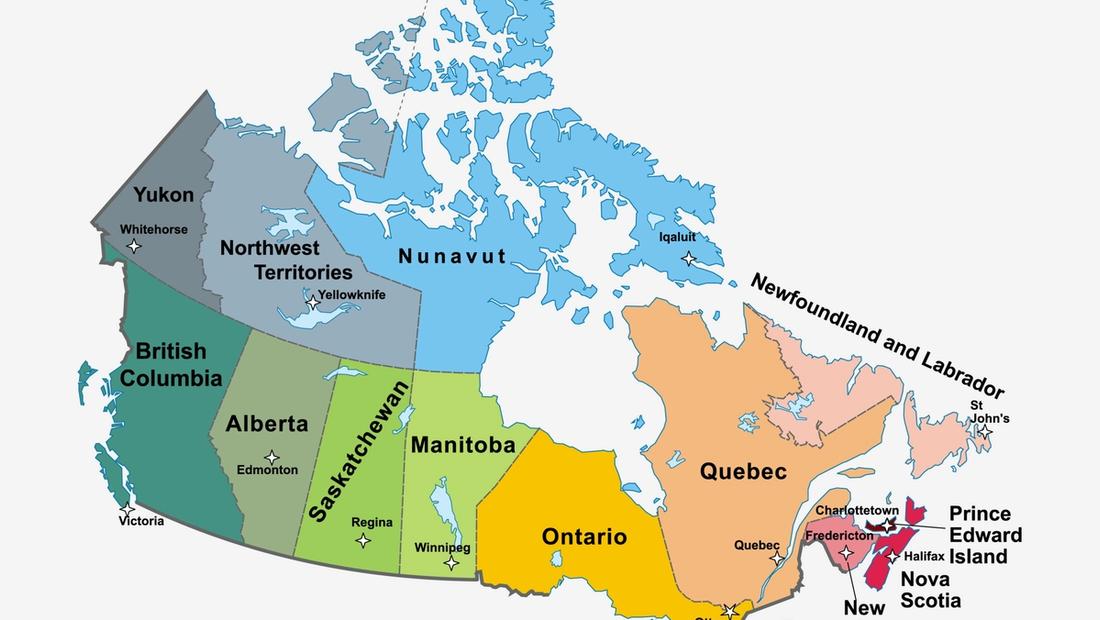
WHMIS is federal for suppliers and provincial for workplaces. The federal government sets the rules for labels and safety data sheets; your province or territory sets the rules for training and inspects your workplace. That's why "which WHMIS law applies to me" depends on where your workers are and this guide lists the law and the regulator for every jurisdiction.
The two layers of WHMIS law
Supplier requirements are federal. The classification, labelling, and safety-data-sheet obligations that attach to hazardous products are set by the Hazardous Products Act (HPA) and the Hazardous Products Regulations (HPR), administered by Health Canada. These are the rules that determine what a compliant label and safety data sheet (SDS) must contain.
Workplace requirements are jurisdictional. How those products are handled, communicated, and trained on inside a workplace is governed by the occupational health and safety (OHS) legislation of the relevant province or territory — or, for federally regulated sectors such as banking, interprovincial transport, and telecommunications, by the Canada Labour Code. Every jurisdiction based its WHMIS provisions on a common national model, but, as the Canadian Centre for Occupational Health and Safety (CCOHS) notes, "small variations between jurisdictions may exist."
Currency: the amended WHMIS
WHMIS is harmonised with the United Nations’ Globally Harmonized System of Classification and Labelling of Chemicals (GHS). Amendments to the HPA and HPR came into force on December 15, 2022, aligning Canada with the 7th revised edition of the GHS and adopting elements of the 8th — the framework a compliant course will describe as GHS Rev 7 with the Rev 8 updates. Suppliers were granted a three-year transition period, which ended on December 14, 2025, with mandatory compliance from December 15, 2025; labels and SDSs should now reflect the amended requirements. (Health Canada has indicated it will focus on compliance promotion rather than strict enforcement until July 19, 2027, to align with the corresponding United States deadline.) Training that still references only "WHMIS 2015" is, by definition, describing the former system.
What every jurisdiction requires of employers
Although the enforcing authority changes across the country, the core employer duties are consistent. In all Canadian jurisdictions, an employer must:
- Develop, implement, and maintain a worker education and training program covering the hazards and safe use of every hazardous product in the workplace;
- Ensure hazardous products are properly labelled, including preparing workplace labels where required;
- Provide workers with access to current safety data sheets; and
- Implement appropriate control measures to protect worker health and safety.
Two features of the training duty are frequently misunderstood and worth stating plainly. First, WHMIS training has two distinct parts: generic education — the portable knowledge of how WHMIS works, hazard classes, pictograms, labels, and SDSs, which a quality online course can deliver — and workplace-specific training on the actual products and procedures at a given site, which the employer must always provide directly. No online course, however good, discharges the second obligation. Second, the duty rests with the employer and cannot be delegated away: an employer may engage an external provider to deliver the education, but remains legally accountable for ensuring workers are properly trained.
What an inspector actually verifies
WHMIS compliance is not established by a certificate on file; it is established by evidence that training occurred and was effective. When an OHS inspector examines a workplace, the employer is expected to demonstrate that a WHMIS program is in place, show current SDSs and correct labels, and produce education and training records for workers exposed to hazardous products. Critically, inspectors may also speak directly with workers to confirm that training genuinely took place — expecting each worker to explain the hazards of the products they handle, how to protect themselves, and what to do in an emergency.
This is where the quality of a training record matters most. A record is only as defensible as its ability to answer a simple question: did the specific, named worker actually complete this training? A certificate bearing only a typed name cannot answer it — the training could have been completed by a colleague, or, increasingly, by an AI browser plugin used to cheat on a WHMIS exam. Under the recognized training-quality standard ANSI/ASSP Z490.1-2024 — Criteria for Accepted Practices in Safety, Health, and Environmental Training — verifying the identity of the learner and confirming genuine participation are treated as baseline requirements. And because regulators assess employer due diligence against what is reasonably practicable, the ready availability of low-cost identity verification and assessment integrity tools is steadily raising the bar for what an acceptable record looks like. Training that cannot prove who was trained is, quietly, becoming the weak point in an otherwise compliant program.
WHMIS by jurisdiction
The following sets out the governing legislation and enforcing authority for each Canadian jurisdiction. Always confirm the current requirements with the regulator that applies to your workplace.
Federally regulated workplaces (Canada)
Federally regulated sectors fall under the Canada Labour Code, Part II and the Canada Occupational Health and Safety Regulations (Part X, Hazardous Substances — Division III, Hazardous Products), enforced by the Employment and Social Development Canada (ESDC) Labour Program. Supplier-side obligations continue to sit with Health Canada under the HPA and HPR.
Alberta
Alberta regulates workplace WHMIS through the Occupational Health and Safety Act, the OHS Regulation, and the OHS Code (Part 29), enforced by the OHS Division of the Ministry of Jobs, Economy, Trade and Immigration. Alberta does not prescribe a fixed retraining interval; instead, employers must keep training current and review it when products, processes, or hazard information change — a practical expectation of at least periodic refresh.
British Columbia
British Columbia’s requirements sit within the Workers Compensation Act and the Occupational Health and Safety Regulation (sections 5.3 to 5.19), administered by WorkSafeBC. British Columbia frames WHMIS obligations within its broader hazardous-substances provisions, and WorkSafeBC’s officers actively assess whether worker education has translated into demonstrable understanding.
Manitoba
Manitoba applies The Workplace Safety and Health Act and The Workplace Safety and Health Regulation (Part 35), enforced by Manitoba Labour and Immigration, Workplace Safety and Health.
New Brunswick
New Brunswick regulates WHMIS under its Occupational Health and Safety Act and a dedicated Workplace Hazardous Materials Information System Regulation, enforced by WorkSafeNB.
Newfoundland and Labrador
The province applies its Occupational Health and Safety Act and WHMIS Regulations, enforced by the Occupational Health and Safety Division of the Department of Government Services, with WorkplaceNL supporting WHMIS education and awareness.
Nova Scotia
Nova Scotia regulates WHMIS through its Occupational Health and Safety Act and the Workplace Health and Safety Regulations (Part 3), enforced by the Department of Labour, Skills and Immigration.
Ontario
Ontario applies the Occupational Health and Safety Act together with R.R.O. 1990, Regulation 860 (WHMIS), enforced by the Ministry of Labour, Immigration, Training and Skills Development. As Canada’s largest labour market, Ontario sees correspondingly active enforcement, and Regulation 860 sets out the worker instruction and training expectations in detail.
Prince Edward Island
Prince Edward Island regulates WHMIS under its Occupational Health and Safety Act and Workplace Hazardous Materials Information System Regulations, enforced by the Workers Compensation Board (WCB) of PEI.
Quebec
In Quebec, WHMIS is known as SIMDUT (Système d’information sur les matières dangereuses utilisées au travail). It is governed by An Act Respecting Occupational Health and Safety (CQLR, c. S-2.1) and the Hazardous Products Information Regulation (CQLR, c. S-2.1, r. 8.1), administered by the Commission des normes, de l’équité, de la santé et de la sécurité du travail (CNESST). Employers operating in Quebec should ensure training materials and documentation are available in French.
Saskatchewan
Saskatchewan applies The Saskatchewan Employment Act (Part III, Division 7) and The Occupational Health and Safety Regulations, 2020 (Part 22), enforced by WorkSafe Saskatchewan — a partnership between the Saskatchewan Workers’ Compensation Board and the Ministry of Labour Relations and Workplace Safety.
Northwest Territories and Nunavut
The two territories share an enforcement authority. Each applies its own Safety Act and Occupational Health and Safety Regulations (Part 22), both enforced by the Workers’ Safety and Compensation Commission (WSCC).
Yukon
Yukon regulates WHMIS under the Workers’ Safety and Compensation Act and its WHMIS Regulations, enforced by the Workers’ Safety and Compensation Board.
What this means in practice
For a national employer, the practical takeaway is reassuring: because every jurisdiction derives from the same model, a single well-built WHMIS education program will satisfy the generic-education duty across the country, provided it is current with the amended standard. What changes by jurisdiction is the regulator you answer to and the workplace-specific training you must layer on top — obligations that remain the employer’s to fulfil wherever you operate.
What does not change is the underlying test every regulator is moving toward: an employer must be able to prove that the right worker was trained, and that the worker can demonstrate the knowledge. A training program built for that test — one that verifies each learner’s identity, confirms genuine participation, and issues a tamper-resistant, portable record — produces documentation that holds up under inspection in any province or territory. That is the standard Gardril is built to meet: every learner identity-verified, every assessment protected against automated completion, and every certificate tied to the real, named person who earned it.
Frequently asked questions
Is WHMIS a federal or a provincial responsibility?
Both. The federal government, through Health Canada, sets the supplier-side rules for classifying and labelling hazardous products and preparing safety data sheets under the Hazardous Products Act and Hazardous Products Regulations. How those products are used, communicated, and trained on inside a workplace is regulated by each province and territory under its own occupational health and safety legislation — or, for federally regulated sectors, by the Canada Labour Code.
Does one WHMIS course cover all of Canada?
A quality WHMIS education course covers the generic, portable knowledge — how WHMIS works, hazard classes, pictograms, labels, and safety data sheets — and that knowledge applies across every jurisdiction because all provinces and territories built their WHMIS provisions on the same national model. It does not, however, discharge the employer’s separate duty to provide workplace-specific training on the actual products and procedures at a given site. That part is always the employer’s to deliver directly.
How often is WHMIS retraining required?
Most jurisdictions do not set a fixed retraining interval. Instead, the expectation is that training is kept current and reviewed whenever a new hazardous product is introduced, a process changes, or new hazard information becomes available. In practice this means at least periodic refresher training, and prompt retraining whenever workplace conditions change.
Is "WHMIS 2015" still current?
No. Amendments to the Hazardous Products Act and Hazardous Products Regulations came into force on December 15, 2022, aligning Canada with the 7th revised edition of the GHS and elements of the 8th. The supplier transition period ended December 14, 2025. Training that references only "WHMIS 2015" is describing the former system.
What does an inspector look for to confirm WHMIS training?
An inspector expects to see a WHMIS program in place, current safety data sheets, correct labels, and education and training records for workers who handle hazardous products. Inspectors may also speak directly with workers, expecting each to explain the hazards of the products they handle, how to protect themselves, and what to do in an emergency. A defensible record is one that can prove the specific, named worker actually completed the training.
OHS regulator by jurisdiction
Each jurisdiction’s official occupational health and safety regulator is the authoritative source for current WHMIS requirements. Always confirm the rules that apply to your workplace directly with the relevant authority below.
- Federal (Canada Labour Code, Part II): Employment and Social Development Canada — Labour Program
- Alberta: Occupational Health and Safety — Government of Alberta
- British Columbia: WorkSafeBC — Health & Safety
- Manitoba: SAFE Work Manitoba
- New Brunswick: WorkSafeNB
- Newfoundland and Labrador: Occupational Health and Safety — Department of Government Services
- Northwest Territories and Nunavut: Workers’ Safety and Compensation Commission (WSCC)
- Nova Scotia: Department of Labour, Skills and Immigration — Health and Safety
- Ontario: Workplace health and safety — Ministry of Labour, Immigration, Training and Skills Development
- Prince Edward Island: Workers Compensation Board of Prince Edward Island — Health and Safety
- Quebec: CNESST — Prevention and safety
- Saskatchewan: WorkSafe Saskatchewan — Occupational Health and Safety
- Yukon: Workers’ Safety and Compensation Board of Yukon
Related reading: What to check before you buy WHMIS training: a buyer’s checklist.