How to Choose WHMIS Training in Canada and How to Tell If a Certificate Is Real
Published: July 12, 2026 · Last updated: September 12, 2026
Most WHMIS courses look the same: an hour online, a quiz, a printable certificate. The difference that matters is whether the certificate proves YOU took the course and many providers can't show that. Here's what to check before you pay for WHMIS training, and how to tell whether a certificate will hold up.
1. Is it current and aligned to GHS Rev 7 with the Rev 8 updates?
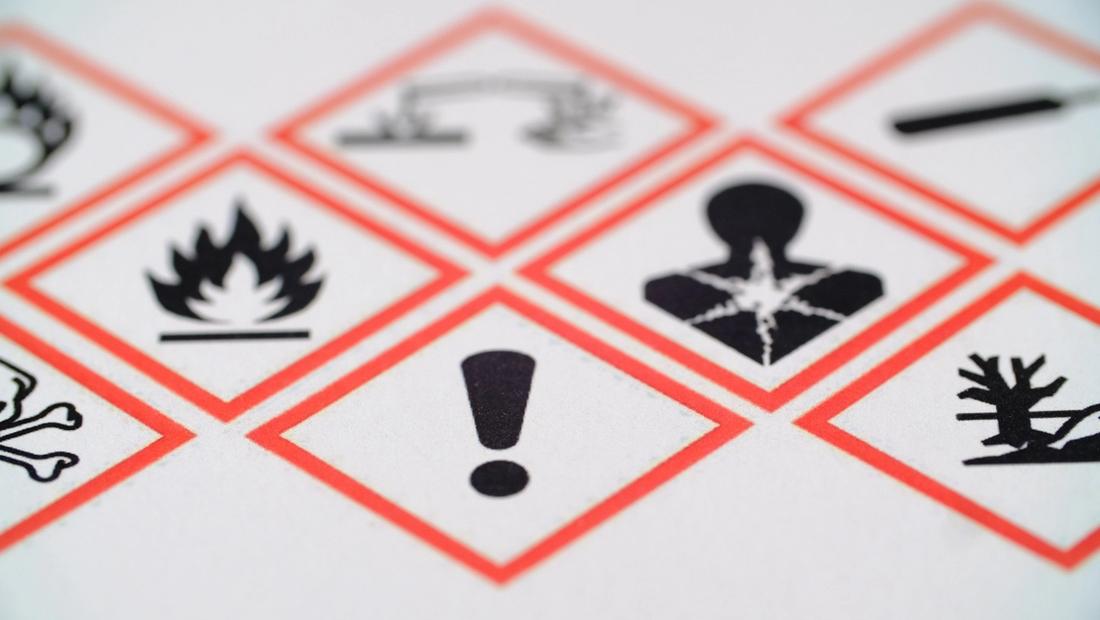
Current, compliant WHMIS training is aligned to GHS Rev 7, with the Rev 8 updates that became mandatory in December 2025 so every label and Safety Data Sheet reflects the latest requirements. A course written before those updates can teach you outdated pictograms and label rules. Check that the course states it's aligned to GHS Rev 7 with Rev 8 updates and fully compliant for 2026. If a course is still referencing WHMIS 2015, it could be "stale" and out of date.
2. Is it the education part and do you understand what it doesn't cover?
WHMIS training has two parts, and no online course can do both:
- Generic education: how WHMIS works, hazard classes, pictograms, labels, and Safety Data Sheets. This is portable, and it's what a good online course delivers.
- Workplace-specific training: the actual products, procedures, storage, and emergency steps at your job site. Your employer is legally required to provide this, no matter which course you take.
Any provider claiming that a single, generic online course makes you "fully WHMIS compliant" is overselling. The honest ones tell you the employer still owns the workplace-specific piece.
3. Will the certificate be trusted?Can the training provider prove you took the course?
This is the question almost nobody asks, and it's the one that matters most when an inspector or a new employer looks at your record.
A standard WHMIS certificate has a name typed on it. It can't show who actually sat the course. A coworker, a friend, or increasingly an AI bot could have clicked through the quiz. That's a real gap: if the certificate can't prove the person named earned it, how can an employer fully trust it?
Before you buy, ask:
- Is the learner's identity verified? The strongest providers verify a government ID and match it to a live facial scan, so the certificate is tied to a real, named person not just a name typed in at the create account stage.
- Are assessments protected against bots? If an automated tool can pass the quiz, the credential proves nothing.
- Is the certificate tamper-resistant and verifiable later? An employer should be able to confirm it's genuine, not just look at a PDF.
Training fraud is rampant in the safety-training industry, and WHMIS certificates are no exception. See this article for just how bad things have become.
A certificate built this way holds up because it answers the one question a generic certificate can't: did this specific person actually complete the training?
4. Is it built to a recognized standard?
Look for training built to ANSI/ASSP Z490.1-2024 Criteria for Accepted Practices in Safety, Health, and Environmental Training. This is the recognized standard for the quality of environmental, health, and safety training. It's a signal the course was designed to be defensible, not just quick.
Regulators also expect employers to do what is "reasonably practicable" to keep workers safe. Now that low-cost tools for identity verification and AI-cheating-bot blocking are widely available (and identity verification of the learner is mandated by ANSI) training providers that don't offer these fundamental safeguards are falling out of conformance with the standard.
5. Is the price fair and do you know what you're paying for?
WHMIS courses range from free to around $40. Free sounds appealing, but ask what's missing: is it aligned to GHS Rev 7 with the Rev 8 updates? Is the certificate anything more than an unverifiable PDF? Fair pricing for a course that produces a certificate an employer and regulator will actually trust is money better spent than free training that doesn't hold up. Gardril's WHMIS course is $11.75 — a verified, identity-tied certificate for less than many unverified ones cost, with volume discounts as low as $6 for teams.
6. Is free WHMIS training the same as a valid WHMIS certificate?
Free WHMIS courses are everywhere, and a $0 price tag is tempting. But it's worth understanding what "free" can't include.
Identity verification isn't a checkbox; it's a real process with real cost: scanning a government ID, matching it to a live facial biometric, and blocking AI bots from the assessment. A course given away for free isn't paying for any of that. So a free certificate is, almost by definition, one that can't prove who took the course. It might have been the worker, a coworker, a friend, or an AI bot completing courses in batches by the hundreds.
That's the trade-off nobody mentions. Training only matters if the assessment proves your knowledge and the method proves you took it. A free course can deliver the content, but it can't deliver that proof and the proof is the part that has to survive an audit.
None of this makes free training useless for learning the material. It means a free certificate shouldn't be mistaken for a defensible record. If the certificate has to stand up to an employer, an inspector, or an insurer, "free" and "verified" don't currently come in the same package.
What this looked like in practice
A composite drawn from real patterns we see across workplaces — details changed, no single company depicted. A 40-person light-manufacturing shop signed its crew up for free online WHMIS to tick the box. After a solvent splash sent a worker to the clinic, the follow-up inspector asked for training records. What the safety lead found: typed-name PDF certificates from a provider whose website no longer existed and three of them showing the same completion timestamp, because a supervisor had "helped" by clicking through courses in a batch. The records weren't evidence of training; they were evidence of the opposite. The shop re-trained everyone on an identity-verified WHMIS course where each certificate tied to a verified person. So the next time someone asks who took this course, the record answers for itself.
The quick version
Before you buy WHMIS training, confirm it is aligned to GHS Rev 7 with the Rev 8 updates (fully compliant for 2026); is honest that your employer still owes you workplace-specific training; verifies your identity so the certificate proves you took it; blocks bots on the assessment; is built to ANSI/ASSP Z490.1; and is fairly priced for a credential that survives an audit.
Gardril was built around the proof problem: every learner is identity-verified, every assessment is bot-resistant, and every certificate is tied to the real person who earned it. Real person, real training, and a record that holds up when it counts.
Frequently asked questions
Does a WHMIS certificate expire?
WHMIS legislation doesn't set a fixed national expiry date. What it requires is that workers' knowledge stays current and that the employer ensures training is reviewed and refreshed when hazards, products, or rules change, and many workplaces refresh annually as a matter of policy. Some jurisdictions set their own review expectations, so check yours. Treat "no expiry date" as "the employer owns keeping it current," not "train once, done forever."
Is online WHMIS training valid in Canada?
Yes for the generic education part: hazard classes, pictograms, labels, and Safety Data Sheets. What no online course can deliver is the workplace-specific part: your site's actual products, procedures, and emergency steps — which your employer is required to provide on top of any course you take.
What's the difference between WHMIS 2015 and current WHMIS?
Canada's WHMIS rules were amended to align with newer editions of the GHS (Rev 7, with some Rev 8 elements) and the transition became mandatory in December 2025. A course still teaching "WHMIS 2015" content may show outdated label elements and hazard classes. Look for a course that states it's aligned to GHS Rev 7 with the Rev 8 updates.
Who enforces WHMIS?
Two levels. Health Canada regulates suppliers: the labels and Safety Data Sheets on hazardous products. Workplace training and use are enforced by each province's or territory's occupational health and safety regulator (and federally regulated workplaces have their own). If you want the jurisdiction-by-jurisdiction picture, we've mapped it in WHMIS Across Canada: Legislation and Enforcing Authority in Every Province and Territory.
Do I need my own WHMIS certificate to get hired?
Many employers require proof of WHMIS education before your first shift, because it saves them having to deliver the generic portion themselves. A portable, verified certificate that proves you completed the training is exactly what a hiring manager can accept without a second thought. An unverifiable PDF makes them do the checking and take the risk.